
How to keep a technical blog publishing rhythm sustainable
Technical blogs often do not stop because the writer runs out of ideas. They stop because the publishing rhythm was never designed for real energy, real review time, or real maintenance cost.
That is why many blogs feel productive for two weeks and then disappear for two months. The system was built around ambition, not repeatability.
This post is about setting a cadence you can actually keep. The goal is not maximum output. The goal is a rhythm that survives busy weeks without collapsing the whole blog.
1. The common mistake is designing a rhythm from ideal weeks
People often plan a publishing schedule from their best week: plenty of focus, enough writing time, enough image time, and no interruptions.
That plan usually looks good on paper and fails in real operations. A rhythm designed around ideal weeks is too large by default.
2. A sustainable rhythm works only when each post type has a different weight
This is the main operating rule. Not every post should cost the same to produce, and not every week should ask for the same kind of output.
Technical blogs become easier to maintain when you deliberately separate heavier pillar posts from lighter supporting posts and practical operations posts. If every slot in the schedule expects a high-effort flagship article, the blog becomes fragile almost immediately.
A better cadence uses mixed weight. One week may carry a heavier structural article. The next may use a narrower problem-fix post. Another may use an operational standard or checklist. The rhythm survives because the load changes shape, not because the writer becomes more disciplined.
This matters because publishing cost is not just writing time. Review time, image time, internal linking, and post-deploy checks all compound. A cadence that ignores those layers will always feel easier in planning than in practice.
3. Think in repeatable weekly units
A simple repeatable pattern is often enough:
- one heavier pillar or standard-setting post
- one narrower follow-up or problem-fix post
- optional maintenance or operations post when needed
The point is not to force three posts every week. The point is to know which kind of slot you are filling and how much effort it should consume.
4. Protect the review and image budget too
Many publishing plans fail because they count writing only. But a post that needs a strong hero image, an explanatory image, metadata work, and a real review is more expensive than the draft alone suggests.
That is why cadence should be measured in production weight, not post count.
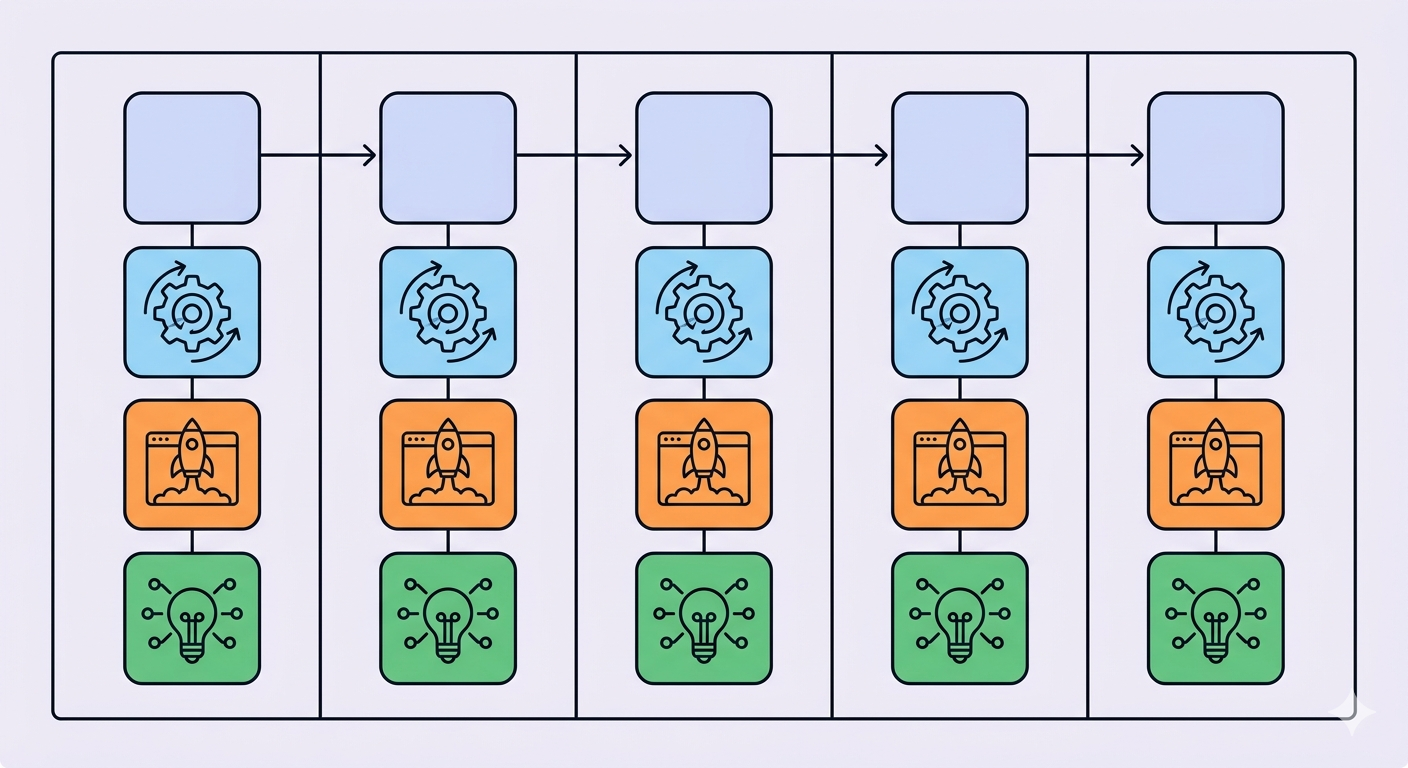
5. One concrete example is enough
Imagine a technical blog that tries to publish two major articles every week. The writing may start well, but image work, review time, and internal link upkeep quickly stack up. After a short burst, the whole system stalls.
Now imagine the same blog with one major article and one smaller operational follow-up. The surface area shrinks, the review cost becomes manageable, and the cadence becomes believable.
What to do first
Take your next four planned posts and label each one as pillar, follow-up, or operations. If every post is heavy, your cadence is already too expensive to keep.