
7 rules to lock down before operating a technical blog
Most technical blogs do not drift because the writer suddenly becomes worse. They drift because the operating rules were never locked while the first few posts were going live. Topic boundaries blur, slugs get inconsistent, internal links stay random, and every new article invents a new exception. The real cost is decision fatigue: the same basic choices must be made again on every publish.
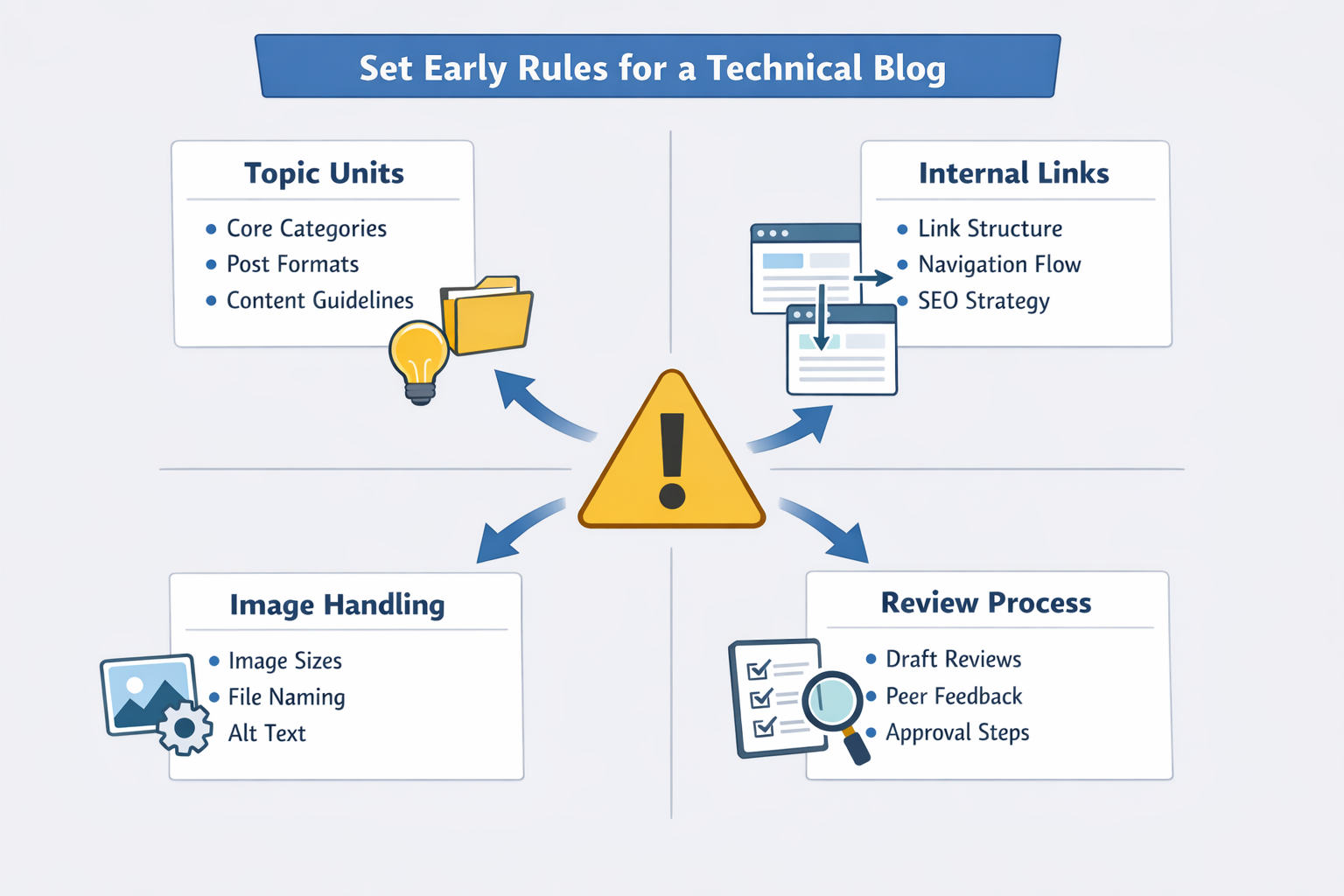
If you want a technical blog that still feels coherent after twenty posts, you need to fix a small set of editorial and operating rules early. These seven rules are the first layer.
1. Define the topic unit before you define the next post
A technical blog becomes easier to operate when related posts belong to one topic unit with a shared purpose. That gives you a stable home for related links, follow-up posts, and measurement.
Do not start from “what should I post today?” Start from “what operating unit does this post belong to?”
2. Lock title and description patterns early
The blog should not swing between vague essays and search-driven fix posts with no rule. Decide how titles explain benefit, problem, or checklist value, and decide how descriptions summarize the practical scope of the post.
This is not branding polish. It is operational consistency.
3. Use one slug rule and keep it mechanical
Slugs should not depend on mood. A technical blog is easier to maintain when slug length, language, and structure are predictable. That helps with internal links, search indexing, and later editing.
A simple rule is enough: use English slugs, keep them descriptive, and keep the same naming logic across the whole unit. That keeps URLs easier to share, less likely to break, and easier to search inside the codebase.
4. Internal links should be designed, not improvised
Without an internal link rule, every post behaves like an isolated article. Decide when to link to the unit page, when to link to deeper articles, and how many follow-up paths each post should create.
For example, a core post should usually link up to its unit page and down to one or two narrower follow-up guides. That turns the blog from a page collection into a navigable system.
5. Image rules should remove choice, not add more choice
Technical blogs slow down when every post invents a new image pattern. Fix the rule for hero selection, inline image slots, file naming, alt handling, and locale-safe visuals so the system decides most of it.
If image handling keeps becoming a custom decision, publishing speed will keep dropping.
6. Review should leave memory behind
A good review is not only “rewrite this paragraph.” It should add a rule that strengthens the next article. That is why review memory matters in a technical blog workflow: it prevents the same quality mistakes from repeating.
One practical version is simple: after review, add one line to the shared memory file such as “always add one concrete internal-link example” or “keep image rules mechanical.” That is what turns review into system improvement.
7. Measure what makes the unit stronger
Do not track only pageviews. Track whether readers move to the unit page, whether they click into related posts, and whether your publishing cost stays controlled. Those are stronger signals for an operations blog than raw impressions alone.
What to fix first
If you are setting up a technical blog now, lock the topic unit, title rule, slug rule, and internal link rule first. Those four decisions remove most of the chaos that appears after the first few posts.